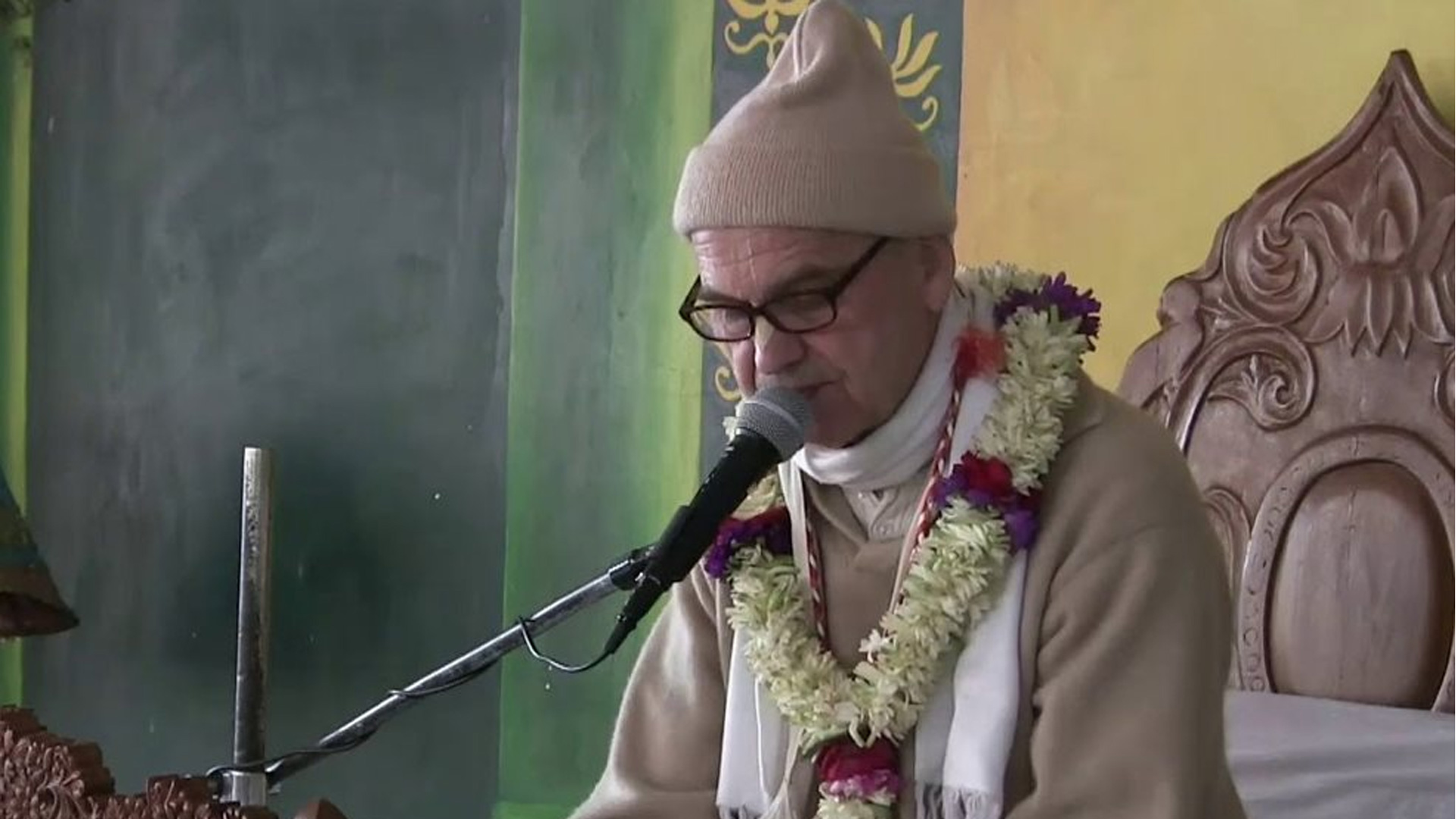
A Life Immersion
From the initial sparks of existential questioning to becoming a globally recognized, steadfast pillar of modern Gaudiya Vaishnava leadership.
From the initial sparks of existential questioning to becoming a globally recognized, steadfast pillar of modern Gaudiya Vaishnava leadership.
B
orn into a society standing at the precarious crossroads of intense technological advancement and rapidly eroding traditional values, the early life of Hrdaya Caitanya Dasa was punctuated by a persistent, undeniable sense of spiritual dissonance. Despite societal and familial expectations pointing firmly towards conventional secular success, his innate philosophical hunger continuously drew him toward the timeless, unanswered questions of human existence and divine architecture.
His early academic pursuits initially immersed him in rigorous Western philosophical and scientific traditions. While he excelled in these secular arenas, he found their speculative nature and materialistic conclusions ultimately unsatisfactory in resolving the root cause of human suffering. The fundamental questions of identity—"Who am I?", "Why am I forced to suffer?", and "What is the ultimate purpose of life?"—remained unanswered by modern empirical education. It was this intense, unfulfilled intellectual vacuum that primed him for a radical shift in consciousness.
The paradigm shift occurred not through an abstract epiphany, but through direct association with the potent words of a pure devotee. It was during this period of intense existential searching that he was introduced to the Bhagavad-gita As It Is, translated and illuminated by His Divine Grace A.C. Bhaktivedanta Swami Prabhupada.
This transcendental literature did not merely answer his questions; it fundamentally shattered his material worldview. The crystalline logic, the lack of compromise with materialistic dogma, and the profound, transformative warmth of Krishna Consciousness provided the exact blueprint of reality he had been unknowingly seeking. Guided by senior mentors and early disciples of Srila Prabhupada, his intellectual fascination rapidly matured into a deep, unwavering devotional commitment.
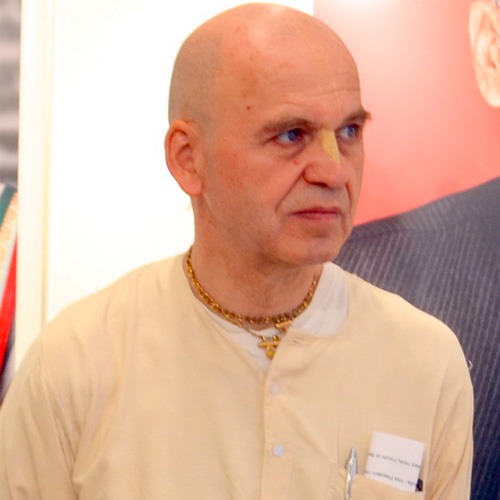
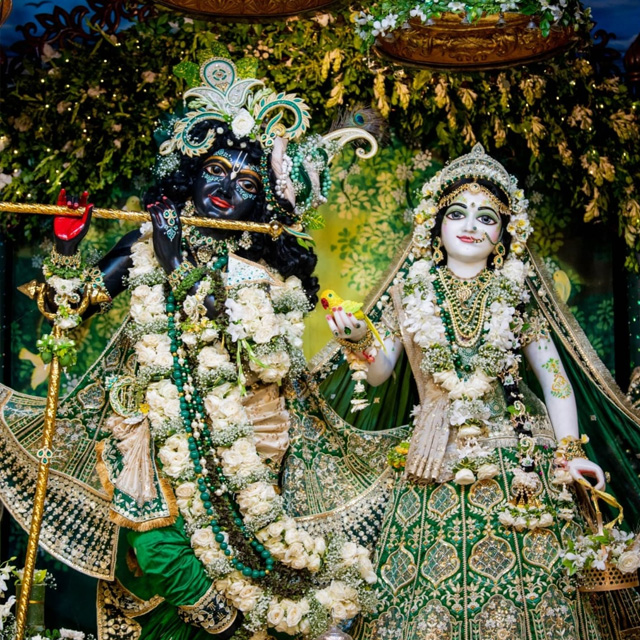
Navigating the austerities of monastic life.
The transition from a secular seeker to an initiated devotee (Bhakta) in the International Society for Krishna Consciousness (ISKCON) required extreme fortitude. The monastic lifestyle (brahmacharya) demanded strict adherence to the four regulative principles—no meat-eating, no illicit sex, no intoxication, and no gambling—alongside the rigorous, daily chanting of sixteen rounds of the Hare Krishna maha-mantra.
Rather than viewing these as burdensome restrictions, he enthusiastically embraced them as the essential spiritual technology required to free consciousness from the dense gravitational pull of material conditioning. Because he underwent this purification process with unwavering sincerity, his seniors quickly recognized not only his strictness in sadhana (spiritual practice) but also his profound, natural capacity to gracefully communicate esoteric truths to a skeptical public.
Over the ensuing decades, his responsibilities within the institution compounded exponentially. Hrdaya Caitanya Dasa transitioned seamlessly from a dedicated young student to an indispensable leader, manager, and ultimately, a revered spiritual guide. He has been pivotal in navigating the complex, often turbulent organizational challenges inherent in scaling a global spiritual movement.
Today, his role extends far beyond local administration. He is sought after internationally for his deep, nuanced lectures that bridge the vast gap between heavy scriptural theology and practical, compassionate daily living. Whether he is actively counseling distressed individuals, inaugurating visionary new temple complexes in emerging regions, or writing extensive, meticulously researched commentaries, his life remains a singular, unbroken offering to his spiritual master, Srila Prabhupada, and the Supreme Lord, Sri Krishna.